.svg)
Spring Turf Planning for Delaware Lawns: Crabgrass Prevention, Sandy Soil Strategy & Early Weed Control

Spring Turf Planning for Coastal Delaware Lawns
Spring at the beach arrives fast. One week it’s hoodies and cool mornings; the next it’s flip-flops, cookouts, and outdoor living. If you want a greener, softer lawn by summer, the steps you take right now matter more than you think.
This guide is written for homeowners across Milton, Lewes, Rehoboth, Dewey, Bethany Beach, Ocean View, Millsboro, and Georgetown. At Lawns Unlimited, we don’t offer mowing, we focus on lawn health, irrigation, and long-term results designed specifically for Delaware’s sandy coastal soils.
Why This Works on the Coast
Coastal lawns warm earlier and dry out faster than inland yards. That combination can invite weeds and thin spots if you wait too long to act. By planning ahead before the first extended warm stretch you get ahead of common problems. That means fewer weeds, fewer bare patches, and more weekends enjoying your patio instead of worrying about the lawn.
Late January to February: Plan for Lawn Success
While your lawn may still look dormant, this is when coastal strategy begins.
Delaware’s sandy soils warm earlier than inland areas but they also dry out faster and lose nutrients more quickly. Waiting until the grass turns green often means you’re already behind.
Late winter is the time to review how your lawn reacted last year and how to stay ahead of the game this year.
Think of this as your coastal game plan. Lawns near Milton, Lewes, and Rehoboth don’t behave like inland clay lawns and they shouldn’t be treated like them.
Late February to March: Beat Crabgrass to the Punch
Crabgrass is easier to prevent than to battle once it takes over. Timing is everything. Instead of watching the calendar, watch soil temperatures. When surface soil temperatures consistently reach the low to mid-50s, it’s time for prevention.
Coastal towns often reach this window first. Not sure when your yard is ready? Our team can pinpoint the right timing for your specific street.
March to April: Feed Steady, Not Heavy
Choose an organic-based, slow-release fertilizer that aligns with your soil test results. The goal is steady growth and stronger roots not a quick green surge that fades by early summer.
As weeds begin to appear, spot-treat only what’s visible. Save heavier weed control for when the grass is actively growing and better able to recover.
Early to Mid April: Wake Up Your Irrigation
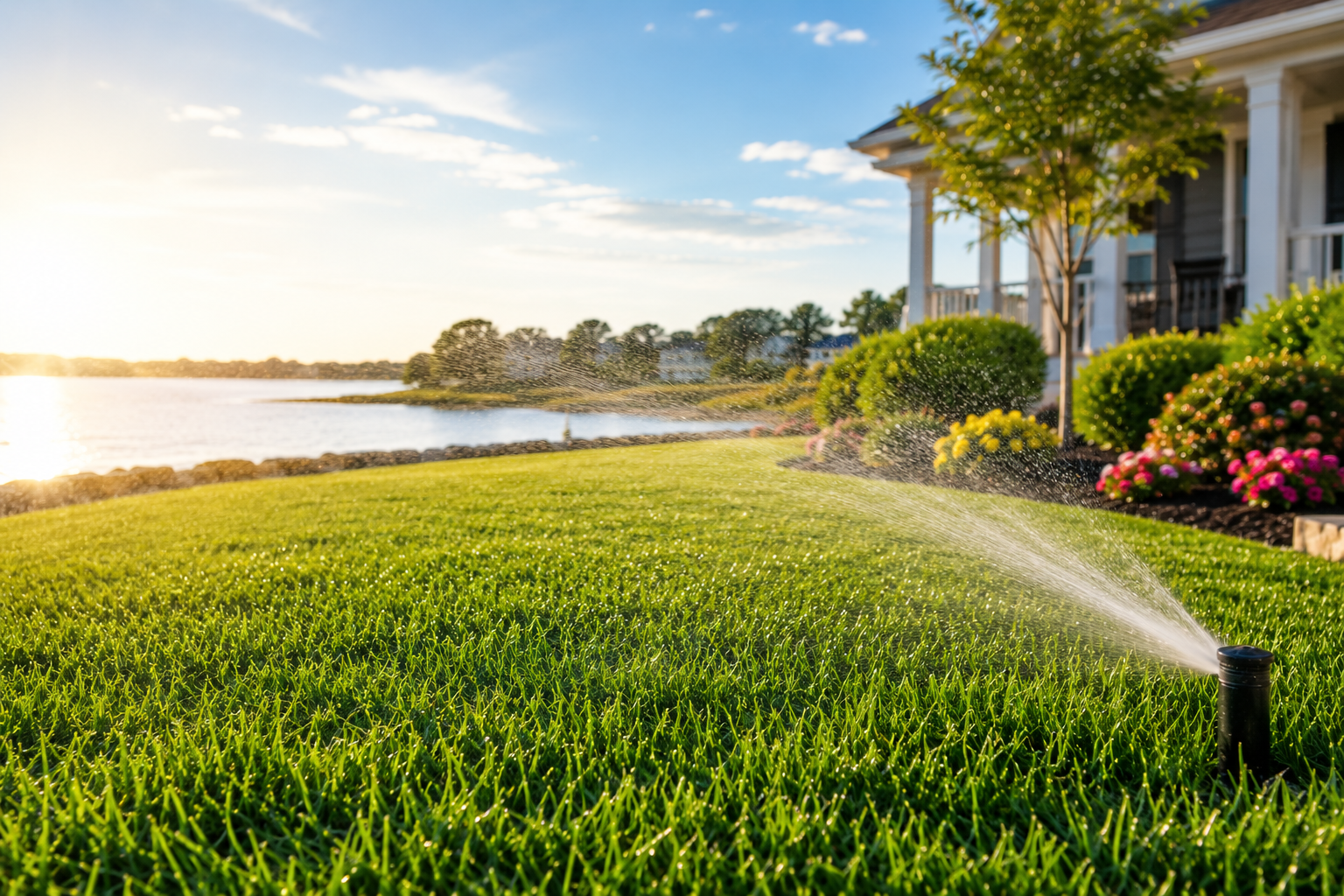
Turn your irrigation system on and walk through it zone by zone. Run each area, straighten tilted heads, and repair any small leaks. Then set a simple schedule while keeping an eye on rainfall.
Most lawns do well with about one inch of water per week, including rain. Water early in the morning, and water less often but more deeply to encourage roots to grow downward.
April to May: Target Weeds Early & Protect Against Spring Pests
By April, Delaware lawns are actively growing and so are weeds. This is when prevention turns into precision.
Instead of heavy fertilizer pushes, this window is ideal for:
- Post-emergent broadleaf weed control (dandelion, clover, henbit)
- Monitoring for early surface-feeding insects
- Adjusting irrigation frequency as temperatures rise
- Strengthening turf density before summer heat stress
Sandy soils don’t hold moisture or nutrients the way heavier soils do. That means balanced feeding, proper timing, and weed control are critical before June heat arrives.
Quick Local Notes
Milton and Lewes
Soils tend to warm earlier, which means crabgrass prevention may need to happen sooner.
Rehoboth and Dewey Beach
Sandy soils drain quickly. Building organic matter over time and maintaining consistent irrigation is key once heat arrives.
Bethany Beach and Ocean View
Salt breezes can stress turf. Slow-release feeding and even moisture help lawns stay resilient.
What We Handle So You Don’t Have To
- Soil-first lawn programs with precise timing for nutrition, weed control, and prevention
- Irrigation start-ups and visits to adjust heads to ensure water goes where it should
FAQs
When should I apply crabgrass prevention in coastal Delaware?
When surface soil temperatures stay in the low to mid-50s in early spring. The exact timing varies each year, so a local check is important.
Do I need a soil test every year?
Yes, due to the sandy soils in the Delaware, we test every year to check if anything is lacking.
Is an organic-based lawn program a good fit near the beach?
Yes. With proper timing and irrigation, slow-release programs perform well in sandy soils and maintain color through summer.
Do you offer mowing?
No. We focus on programs and services that build long-term lawn health—that’s how lasting results are achieved.